By LoffMusic Editorial Staff – July 2025
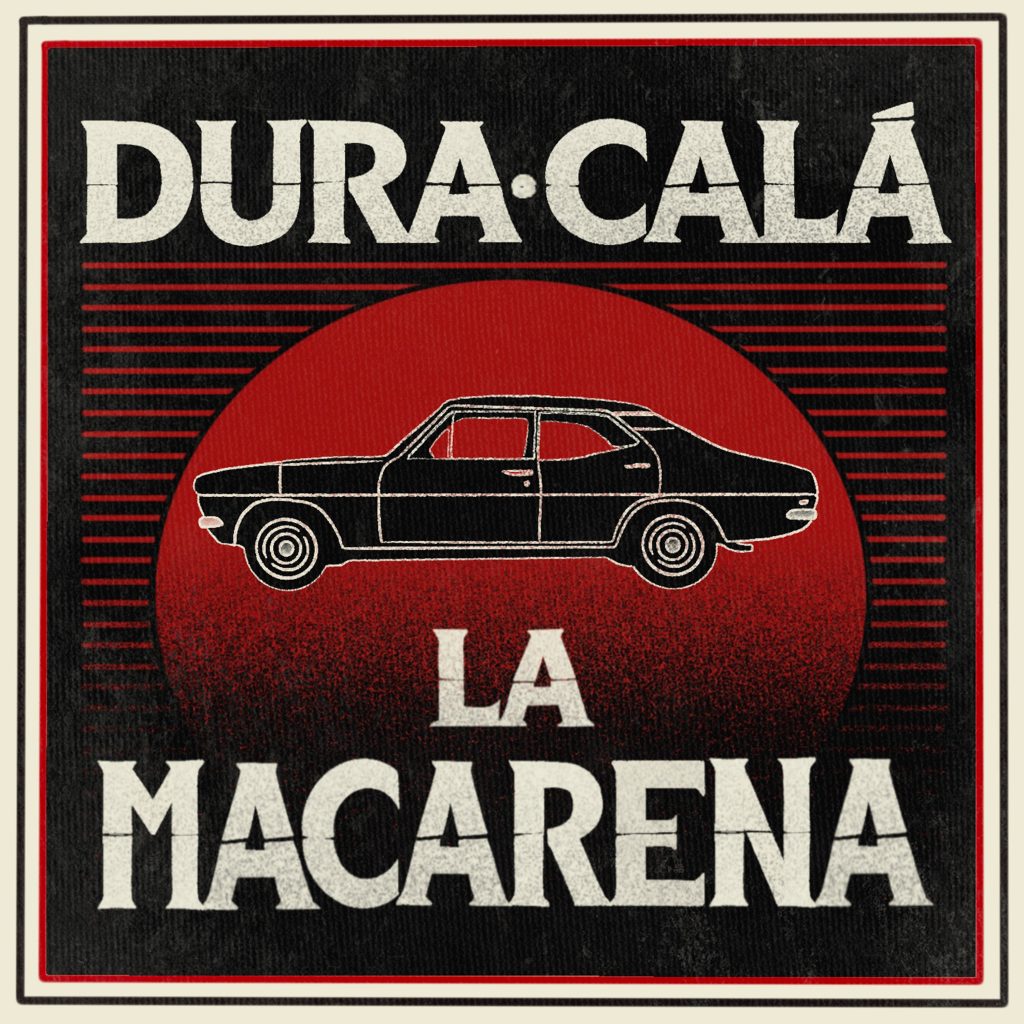
A car, five fugitives, a Los del Río cassette at full volume and the police at their heels. No, it’s not a scene from Perros Callejeros, but the new sound madness of Dura Calá. Their new single La Macarena is a trip without a belt through the quinqui rumba, the eighties cheekiness and the castiza attitude that defines this band from Madrid that never stops growing.
After Tío Pepe’s verbenero tribute, the band launches itself without brakes to claim its identity with a song that could have been signed by El Vaquilla if he had had access to Logic Pro. Because La Macarena sounds like a Seat 124 skidding on the M-30, gas stations with TDK tapes, cigarettes hanging and windows down.
🔊 Rumba, rock and stoner at 120 on Castellana Avenue
Dura Calá is not here to sound polished or fit into molds. In their own words, theirs is “macarreo madrileño”, a sound cocktail where everything fits: Rumba, funk, rock, stoner and a good dose of street. And La Macarena is the proof. A song as fun as it is intense, as provocative as it is catchy. A song that could accompany a chase in Barrio de Fernando León or close an illegal rave in the southern periphery.
The single also marks a sonic evolution. Sharper, more streetwise, more authentic. If Tío Pepe was an accomplice joke, La Macarena is a declaration of principles. Here there is no posturing, there is history, there is a neighborhood and there are nights that are better not to tell until they expire.
🐕 The bastard sons of Los Chichos (and with fuzz guitars).
Formed by musicians seasoned in a thousand battles, Dura Calá was born from the margins, from rehearsal rooms, from the Madrid subway scene. With only one EP, they have hung the “sold out” in their first concerts and have made a place in the family of Calaverita Records and the office Bola 9 (ZOO, Riot Propaganda, Ill Pekeño…).
But beyond their achievements, what makes Dura Calá a necessary band is their sonorous honesty. They do not pretend to be what they are not. They tell stories of losers, of hustlers, of angry outcasts. But they do it with a humor that disarms, with an attitude that enraptures and with an electric rumba that makes the lampposts of Lavapiés shake.
📼 Close your eyes: you are in 1992.
If you listen to La Macarena and you don’t visualize a scene on VHS, with tracksuit jackets, a boom box and an escape through the radio, you’re doing something wrong. Because this is not empty nostalgia, it is a conscious re-reading of the Spanish quinqui imaginary from a fresh and powerful point of view.
Dura Calá does not pay homage: it reconstructs, remixes and shakes, as if El Torete had discovered the fuzz and decided to found a band.