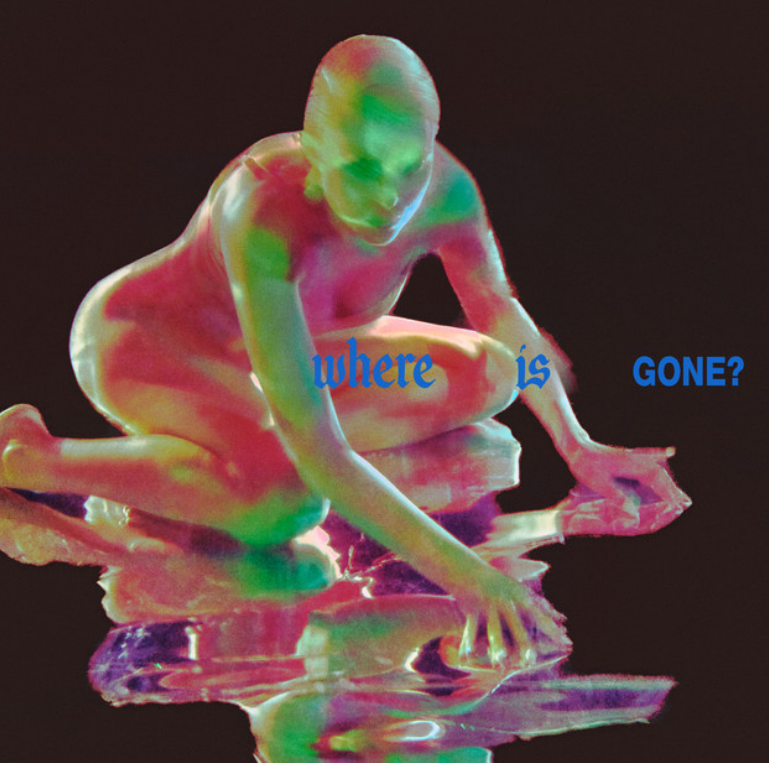
The British band presents an intimate version of “Blue Flame,” recorded during their French tour. James Edward Bagshaw stars in an acoustic session that reveals another side of BLISS, the album that Temples will bring to Spain in November.
There are songs that seem to be made to be surrounded by sound.
Guitars that multiply.
Echoes that come and go.
Synthesizers that envelop the melodies.
Voices that seem to come from another time.
And then there’s the question that every musician ends up asking themselves at some point:
What happens if we take almost all of that away?
Temples just answered it.
The British band has released a new version of “Blue Flame,” one of the songs from BLISS, their latest album, which was released on June 26, 2026, via V2 Records.
But this time, there are no plans to reconstruct the entire soundscape of the album.
The proposal is exactly the opposite.
Leave some space.
Reduce the number of elements.
And let the song breathe.
The result is an acoustic session featuring James Edward Bagshaw, recorded at Artistic Palace Studio during the band’s French tour.
A small change that raises a much more interesting question than the release of yet another live video.
What if the real magic of Temples lay beneath all that psychedelia?
Psychedelia can also work on a quiet scale
Since its inception, Temples has cultivated a very unique relationship with the past.
Their songs evoke the psychedelic explosion of the 1960s, but they have never been mere reproductions of that era.
There are echoes of The Beatles, Pink Floyd, The Byrds, and Tame Impala, though the band has developed its own unique style centered on luminous melodies, elaborate arrangements, and a production that turns each song into a small universe.
That’s why it’s especially interesting to hear “Blue Flame” in a smaller format.
In his new session for Pickles, Bagshaw puts the performance front and center and does away with many of the elements we normally associate with the band.
It’s not necessarily about improving the original version.
It’s about looking at it from a different perspective.
Because a song can be hypnotic thanks to its production.
But when it works without that production, we discover something different: the strength of the composition that lay beneath.
BLISS and the album where Temples traded guitars for the dance floor
The new version of “Blue Flame” becomes even more interesting once we understand the context of BLISS.
Released on June 26, it is the fifth studio album by the Kettering-based band, consisting of James Bagshaw, Thomas Walmsley, Adam Smith, and Rens Ottink.
Following the expansive psychedelia of *Exotico* (2023), produced by Sean Ono Lennon, the band decided to take control of their next album and produce it themselves.
The result is one of the most dramatic shifts in his career: less emphasis on guitars, more synthesizers, electronic beats, and references to late-’90s dance culture.
In recent interviews, Temples has explained that this evolution stemmed from their longstanding interest in rhythm, repetition, and movement. They didn’t want to abandon their identity, but rather to discover what would happen if they took it into new territory.
And here we encounter a fascinating contradiction.
While BLISS takes Temples in the direction of electronic music, this new “Blue Flame” session takes the opposite path: it returns the song to its simplest form.
“Blue Flame” and a song about disconnection
It’s no coincidence that “Blue Flame” is one of the tracks on the album best suited for this treatment.
According to the official tour announcement, the song originated from a chorus idea that Adam Smith had been holding onto for some time. Its theme revolves around disconnection, and within the album, it features a slower, cooler atmosphere than some of his more dance-oriented tracks.
ESLAVA THEATER
That difference was already present in the studio version.
Now, with Bagshaw leading the Artistic Palace session, the focus shifts from electronic texture to melodic structure.
The album reminds us of something essential about Temples: no matter how much their songs change in terms of production, pop remains at the heart of their music.
Temples — “Blue Flame” (Live Session at Artistic Palace)
A new acoustic session by Pickles, recorded during their French tour.
Video featured in the band’s promotional material. The official YouTube player can be embedded here in WordPress.
Is *BLISS* Temples’ most daring album?
The critical reception shows that the transformation has left no one indifferent.
AllMusic considers the shift toward dance music to be the most radical in his discography, although it questions some of the results. Rolling Stone Germany acknowledges his pop melodies but also points out some electronic excesses. For its part, Melodic Magazine highlights the blend of psychedelia and electronic music as an exciting, if uneven, evolution.
That distinction is revealing.
When a band associated with such a recognizable sound decides to reinvent itself, it runs the risk of disappointing those who want to hear a follow-up to *Sun Structures*.
But playing that album on repeat indefinitely wouldn’t necessarily be good news either.
Temples seems to have chosen a third path: changing their musical style without giving up their passion for melodies, arrangements, and atmospheres.
And this new interpretation of “Blue Flame” allows us to discover the point where those two phases converge.
Temples will return to Spain in November 2026
The session also comes just a few weeks before the group’s return to our country.
| Date | City | Room |
|---|---|---|
| November 16 | Santiago de Compostela | Capitol Hall — to be confirmed |
| November 17 | Madrid | Eslava Theater |
| November 18 | Zaragoza | López Hall |
| November 19 | Grenada | Aliatar Hall |
| November 20 | Seville | Room X |
| November 21 | Bullas (Murcia) | Antioxidant |
| November 22 | Barcelona | Parallel 62 |
Perhaps the secret of Temples never lay in the effects
There’s something particularly appealing about listening to a psychedelic band break away from its usual style.
Because for years we have associated psychedelia with the expansion of sound.
More layers.
More effects.
More space.
More incentives.
But there’s also another way to make a song hypnotic.
A voice.
A melody.
A rhythm that breathes.
And the feeling that there’s no need to add anything else.
With this new installment of “Blue Flame,” Temples offers a different take on BLISS just as they prepare to return to the Spanish stage.
And perhaps it leaves us with an idea worth remembering:
Psychedelia doesn’t always have to be louder. Sometimes it’s enough to listen to what remains when everything else fades away.