Metallica Turns the Sphere in Las Vegas into a Giant Nightmare: Here’s What Their Biggest Show Ever Looks Like
Multi-story tombs, crosses, destroyed buildings, giant stained-glass windows, and a monstrous Cthulhu surrounding the audience: Metallica has just kicked off “Life Burns Faster,” a 24-concert series at the Sphere in Las Vegas that takes songs like “Master of Puppets,” “The Call of Cthulhu,” and “…And Justice for All” to a whole new level.
Imagine listening to “The Call of Cthulhu.”
Now imagine that while Metallica is playing their 1984 instrumental, a gigantic Lovecraftian creature begins to appear all around you.
Not behind the scenes.
All around you.
Grow.
He’s squirming.
It features a screen that practically wraps around the interior of the room.
And for a few minutes, 17,000 people seem to be caught up in an H. P. Lovecraft nightmare.
Welcome to Metallica’s new concert.
Or maybe we should say:
Welcome to Metallica.
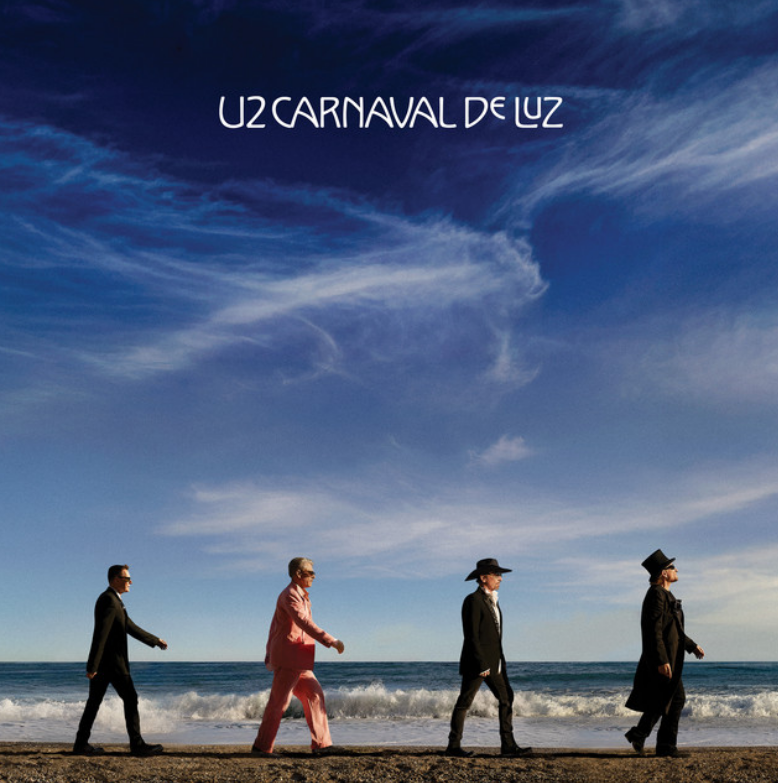
Because on Thursday, October 1, James Hetfield, Lars Ulrich, Kirk Hammett, and Robert Trujillo did something that had seemed inevitable ever since U2 opened the Sphere in Las Vegas in 2023.
Metallica finally joined it.
And the Sphere stopped looking like a screen.
Metallica + Sphere: It was probably bound to happen
Few bands have such a recognizable visual identity.
Crosses.
Tombs.
Lightning.
Justice.
Puppets.
Fire.
Snakes.
Monsters.
Skulls.
For more than four decades, Metallica’s album covers and songs have created a perfectly recognizable universe.
And then a space appears that is capable of transforming that universe into architecture.
The Sphere in Las Vegas features a massive wraparound LED screen and an audiovisual system specifically designed for immersive experiences.
U2 turned it into a landscape.
Dead & Company, Phish, and the Eagles explored other possibilities.
Metallica has decided to do something quite different:
turn it into a horror movie.
The San Francisco Chronicle described images of ropes, crosses, flooded landscapes, and destroyed buildings unfolding on the walls.
And Metallica hardly needed any physical set design.
Four musicians.
Instruments.
A relatively bare stage.
And on the back:
an entire universe.
It all starts with “Battery”
There was no subtle introduction.
Metallica opened with:
“Battery.”
The opening riff of ” Master of Puppets.”
Afterward:
“Creeping Death.”
And then the concept became clear.
This wasn’t Metallica simply adapting a regular concert for a giant screen.
The images were designed to immerse the viewer in the iconography of each song and each album.
The crosses from ” Master of Puppets ” come to life.
The imagery of *Ride the Lightning* expands.
The statue of Justice is no longer on the album cover.
Graves grow to become monuments.
And when “The Call of Cthulhu” arrives…
The monster appears.
Cthulhu Enters the Sphere
To understand this moment, we have to go back to 1984.
“The Call of Cthulhu” closes out *Ride the Lightning*.
The title comes from the universe created by H. P. Lovecraft, specifically *The Call of Cthulhu*, although Metallica deliberately changed the spelling to “Ktulu.”
Cliff Burton ‘s fascination with Lovecraft had a significant impact on the band during those early years.
Later, “The Thing That Should Not Be” would also be released, also inspired by that universe.
In Las Vegas, forty-two years later, Metallica has finally been able to bring that creature to life.
The curved screen transforms Ktulu into a gigantic three-dimensional presence that seems to emerge from the structure.
But there is something far more emotional about this moment than the technology itself.
Before starting the song, Hetfield dedicated it to:
Cliff Burton.
“We love you and miss you, brother,” the singer said in his tribute.
Burton died on September 27, 1986.
He was 24 years old.
Four decades later, a song she helped create ended up surrounded by a monster that would have been technically unimaginable in 1984.
And then they revived “…And Justice for All”
This is probably the other big music news of the night.
Metallica performed:
“…And Justice for All.”
Not a fragment.
The song.
And it hadn’t happened in over a decade.
The last public performance of the entire song had been in 2014.
It’s not hard to see why.
It lasts almost ten minutes.
It has complex structures.
Changes.
Riffs.
And it belongs to that period in Metallica’s career when it seemed like every song needed to contain enough material to make three more.
But inside the Sphere, it takes on a completely different meaning.
The iconography of Lady Justice can now be transformed into a monumental setting.
Suddenly, a song from 1988 seems tailor-made for a technology invented nearly forty years later.
And there was someone interesting in the audience watching it:
Jack White.
“Modern technology and old people playing loud music”
James Hetfield ended up summing it up better than any marketing department could have.
Speaking from the stage about the combination of Sphere technology and four veteran musicians playing music at an absurd volume, he acknowledged that it was quite impressive.
Hetfield is 63 years old.
Lars Ulrich, 62.
Kirk Hammett, 63.
Robert Trujillo, 61.
And that is precisely one of the most fascinating contradictions of the show.
A band formed in 1981—back when a telephone was still tethered to a wall by a cord—has just taken center stage at one of the most technologically sophisticated concerts on the planet.
Lars Ulrich knew within 12 seconds that Metallica had to play there
And this didn’t start in 2026.
It began in 2023.
Lars Ulrich was there when U2 opened the Sphere.
And as he later recounted, it took him about 12 seconds to reach a conclusion:
Metallica had to play there.
For the drummer, the residency offers an opportunity to reinvent the relationship between the band and its audience once again.
The problem was obvious.
How?
Because Metallica isn’t U2.
It’s not the Eagles.
It’s not Dead & Company.
A spectacular screen couldn’t take center stage and relegate the band to performing songs beneath it.
On the first night, he seems to have come up with a pretty clever solution.
The closer you are, the more Metallica. The farther away, the more Sphere
The Las Vegas Review-Journal pointed out a particularly interesting feature of the production.
The setting is surprisingly austere.
The band plays together.
No large buildings.
Without a massive traditional set.
For those up close on the dance floor, the experience may be reminiscent of a much more classic Metallica concert.
But as the viewer moves away…
The Sphere begins to engulf the field of view.
That allows two concerts to take place at the same time.
One down:
Four musicians playing thrash metal.
Another one above:
a massive movie built around them.
And that is probably a crucial decision.
Because there’s an obvious danger when you put a strip in front of the world’s most impressive screen:
Don’t let anyone look at the band.
It wasn’t just a museum of classic cars
Metallica could easily have put on a nostalgic show.
Kill ‘Em All.
Ride the Lightning.
Master of Puppets.
…And Justice for All.
The Black Album.
Good evening.
But on the very first night, he went through practically his entire life story.
They performed “Battery,” “Creeping Death,” “Sad But True,” “The Shortest Straw,” “Wherever I May Roam,” “The Day That Never Comes,” “Nothing Else Matters,” “Ride the Lightning,” “Seek & Destroy,” and “Master of Puppets.”
There was also later material, such as “Now That We’re Dead.”
And 72 Seasons was represented by:
“Lux Æterna.” J
In other words, this is not an exhibition about Metallica.
We’re still talking about Metallica.
The complete setlist from the first night
Counting the songs performed by the band—and excluding the intros and the usual doodle by Kirk Hammett and Robert Trujillo—the core of the concert went like this:
- Battery
- Creeping Death
- Now That We’re Dead
- Sad But True
- The Shortest Straw
- Wherever I May Roam
- The Day That Never Comes
- …And Justice for All
- Nothing Else Matters
- The Call of Cthulhu
- Lux Æterna
- Ride the Lightning
- The Memory Remains
- Seek & Destroy
- Master of Puppets
Sources differ slightly in their counts of the Kirk & Rob Doodle, “Sleepwalk My Life Away,” and the introductions, which is why figures of 16 or 18 pieces are sometimes cited for the opening night.
But the number isn’t really what matters.
Because something else is happening tonight.
If you go today, Metallica won’t be able to play any of those songs
That’s the genius of the format.
No Repeat Weekend.
The “Life Burns Faster ” residency follows the same format Metallica has used in recent years: two concerts over the same weekend, with no repeated songs between the two nights. Metallica explicitly confirms this in the official information about the residency.
That means anyone who goes today, Saturday, October 3, shouldn’t hear:
“Master of Puppets.”
“Nothing Else Matters.”
“Enter Sandman” wasn’t played on Thursday either, so that one is still available.
“One” didn’t show up either.
“For Whom the Bell Tolls,” either.
“Fade to Black,” either.
“Fuel,” either.
“Whiskey in the Jar,” either.
And here’s another reason why this residency is likely to generate a lot of content over the coming months.
Every Saturday, he completes Thursday’s puzzle.
24 concerts
What initially seemed like a limited series ended up expanding.
The demand led Metallica to extend the residency to 24 concerts between October 1, 2026, and March 13, 2027.
Every Thursday-Saturday pair adheres to the ” No Repeat Weekend” concept.
That makes *Life Burns Faster* considerably more ambitious than a simple residency.
Metallica needs:
two repertoires.
Two visual compositions.
Dozens of songs.
And enough audiovisual content so that a giant screen doesn’t end up looking like a very expensive screensaver.
Are we seeing the future of large-scale concerts?
Perhaps that is the truly interesting question.
Because for decades, stadium concerts have evolved by adding new elements.
More lights.
More screens.
More fire.
More platforms.
More scenarios.
More LED bracelets.
More drones.
Increased production.
Sphere changes the way we think.
You no longer need to put on a show on stage.
You can place the audience member right in the middle of the show.
That has enormous consequences.
Imagine Pink Floyd’s *The Wall* there.
Iron Maiden.
Tool.
Nine Inch Nails.
Muse.
Rammstein.
Daft Punk.
Each one could literally build a universe around the audience.
Metallica has just demonstrated just how well metal can also work within that style.
But there’s an even more important question
Is it still a concert?
Because there is a border.
When you’re standing in front of a gigantic screen capable of creating a 100-meter-tall monster, something strange can happen:
forget to watch Kirk Hammett play the guitar.
The Sphere can extend a song.
But you can also compete against her.
And perhaps that’s why Metallica’s greatest success on this first night is precisely what hasn’t changed.
Four people.
Guitars.
Low.
Battery.
An almost bare stage.
Cthulhu might appear behind them.
A city could collapse.
A cemetery can grow.
The universe could explode.
But “Battery” continues to rely on something extraordinarily primitive:
four guys playing it.
45 years later, Metallica has once again found something it had never done before
James Hetfield said something else during the opening night.
After nearly 45 years together, there’s still plenty of fun ahead.
Perhaps that explains *Life Burns Faster* better than any technical details.
Metallica no longer needs to prove that it can fill a stadium.
You don’t need to prove that you can play fast.
There’s no need to prove that ” Master of Puppets ” is a classic.
That happened decades ago.
The challenge now is to find something that still sparks their curiosity.
The Sphere seems to have succeeded.
And during “The Call of Cthulhu,” something happened that perfectly sums up the situation.
A song written when Metallica was practically a band of kids was released amid technology that, at the time, belonged to the realm of science fiction.
Cliff Burton was no longer there to see her.
But his song does.
And finally, the monster that had been hiding within the music for 42 years appeared before her.