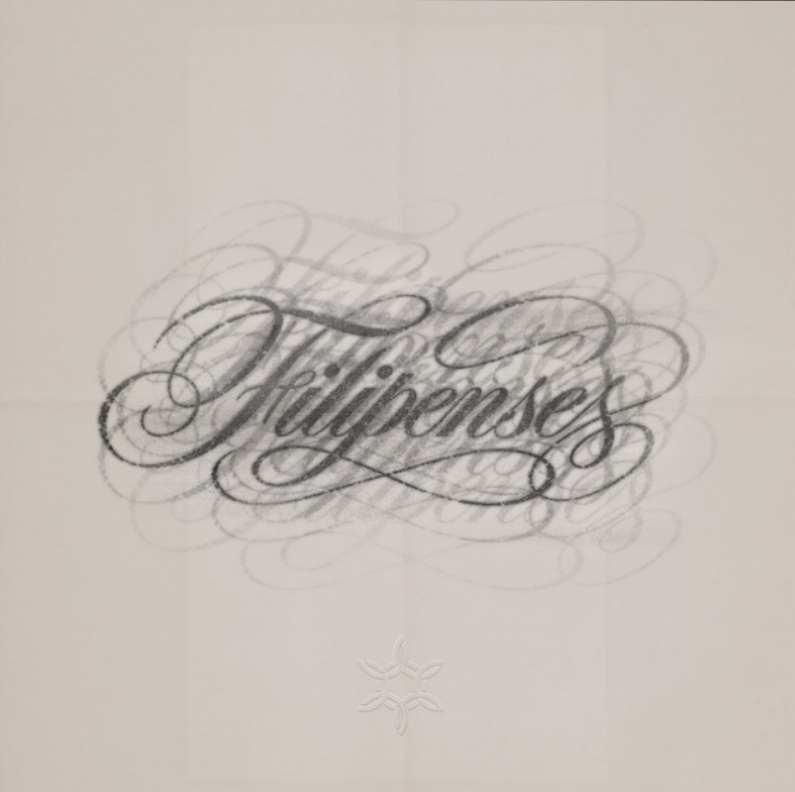
Toro y Moi has just released *Unusua*, a seven-song album that marks one of the most surprising transformations of his career. With no big choruses, no prominent vocals, and with the piano and ambient electronics taking center stage, Chaz Bear proves once again that he’s never been one to repeat himself.
There are artists who find a formula for success and spend the rest of their careers trying to replicate it. And then there’s Toro y Moi, who has been reinventing himself for more than fifteen years every time he seems to have found his definitive sound.
His new album, *Unusua*, released on November 20, 2026, via Company Studio, is probably one of his most unexpected ventures.
The musician who helped define chillwave has decided to turn down the volume, forget about choruses, and let the music breathe.
And the result is quite different from what many of his fans might have expected.
“Unusua” and Seven Songs to Discover Another Side of Toro y Moi
Behind Toro y Moi is Chaz Bear, an American producer and multi-instrumentalist who burst onto the indie scene with *Causers of This* in 2010.
Since then, his discography has spanned psychedelic pop, funk, R&B, electronic music, and hip-hop.
On *Hole Earth* (2024), he explored a style closer to rap and contemporary productions. Now, with *Unusua*, the direction is practically the opposite.
The new album features instrumental compositions, piano melodies, synthesizers, and slowly evolving structures.
There’s no obvious pursuit of the next hit for the playlists. There’s space, repetition, and a much more introspective sensibility.
“Proof” and “Motive”—and When Silence Speaks Volumes
The first signs of this change appeared in October with “Proof,” a piece built around the piano and subtle electronic elements.
Next came “Motive,” a nearly four-minute composition in which melodies repeat, transform, and create an atmosphere that balances calm and melancholy.
Both songs foreshadowed the character of *Unusua*: an album that invites listeners to pay attention to the details rather than expect a big chorus.
In tracks like “Poor Connection” and “Interval,” the album continues to explore that relationship between tranquility and restlessness.
It is music that does not try to impose itself on the listener. It prefers to accompany the listener and leave room for their own emotions.
Fatherhood and a New Creative Phase
One of the keys to understanding *Unusua* lies in the artist’s personal journey.
Early reviews of the album have pointed to the experience of becoming a father as a major source of inspiration for these compositions.
The repetition of routines, exhaustion, uncertainty, and small moments of calm are reflected in music that oscillates between serenity and tension.
It’s not a concept album told through words. It’s a collection of sensations.
And perhaps that’s why it’s particularly interesting within a discography known for its surprises.
All the songs from “Unusua,” Toro y Moi’s new album
The album contains seven tracks:
- Keynote
- Motive
- Proof
- Poor Connection
- Interval
- Lull
- Obsolete
“Unusua ” was performed, arranged, and produced entirely by Chaz Bear, with recordings made at Scenic Route Recording in Berkeley and 2200 Studios in Sausalito, California.
Alex Manriquez handled the engineering and mixing.
Toro y Moi proves that reinventing oneself also means taking a step back
It’s curious that one of the names associated with the birth of chillwave has ended up releasing an album that draws its strength precisely from stillness.
But, in reality, Toro y Moi’s story has always been that of a musician willing to break free from labels.
Unusua doesn’t aim to recreate the sound of *Causers of This*, nor does it seek to rival the energy of *Outer Peace* or *Hole Erth*.
It’s something else entirely.
An album that may seem small in scope, but is important for understanding where Chaz Bear wants to go.
Here at LoffMusic, we’re left with one thought: in an industry obsessed with increasingly instant songs, Toro y Moi has just released an album that calls for exactly the opposite.
Time to listen to it.
And perhaps that’s its greatest strength.