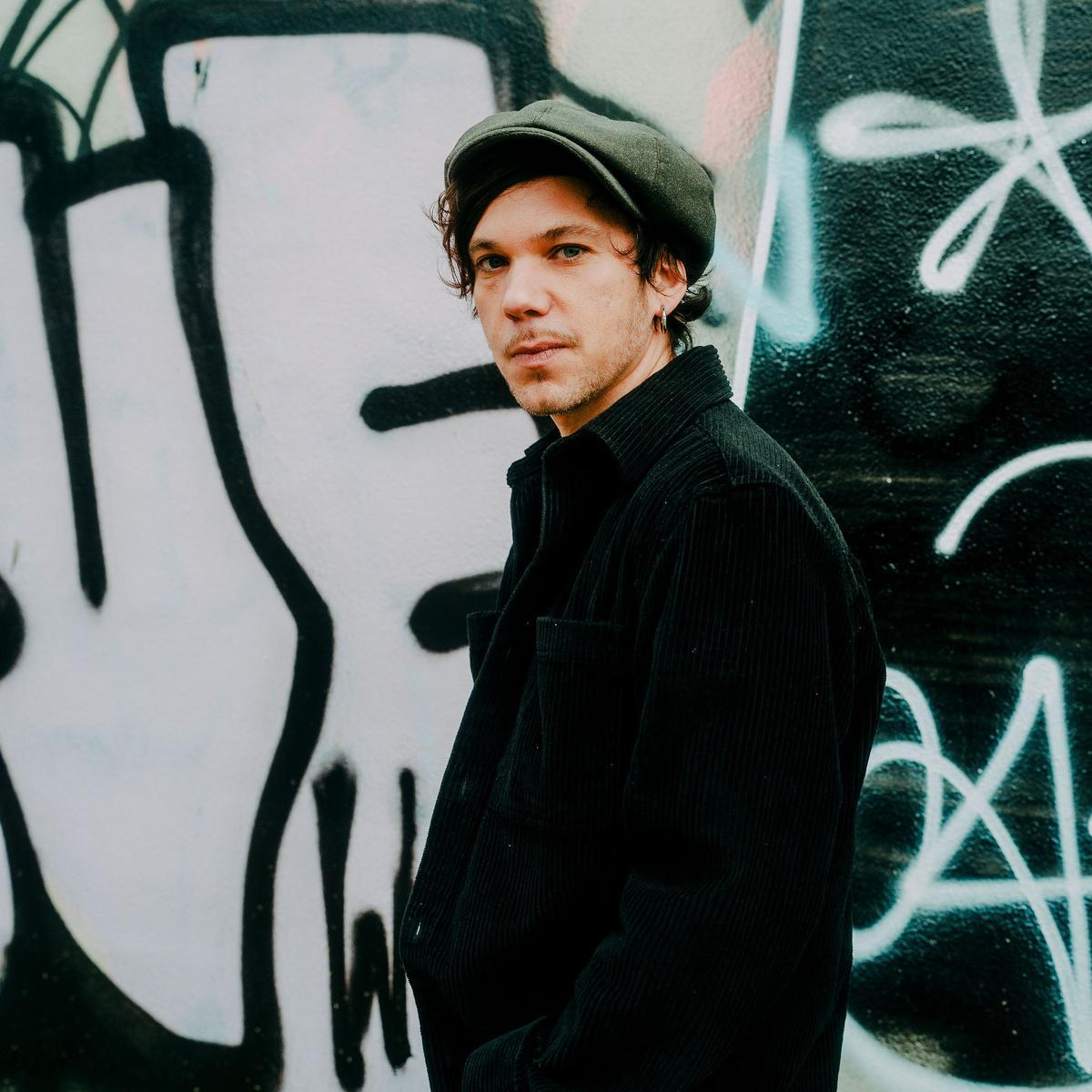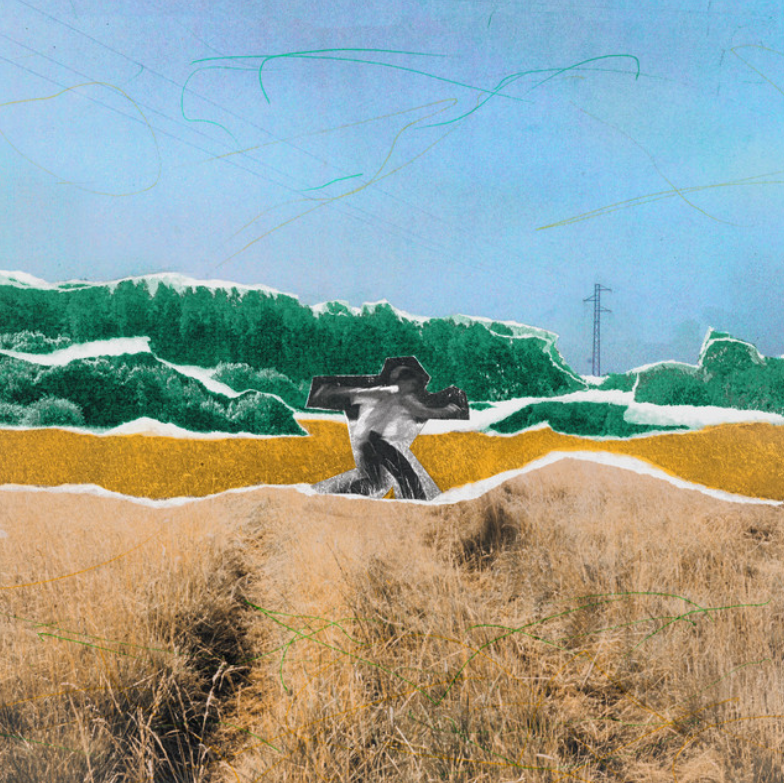
Asturian artist Nacho García joins forces with one of the emerging voices of Spanish neo-soul on “Qué pasa si vuelves,” a song about returning home and discovering that tourism, gentrification, and the passage of time have turned memories into mere backdrops. It’s also the lead single from PRISA, Mardom’s new EP.
There’s a strange feeling that many people who have left the city where they grew up are familiar with.
Back.
Walk down the same streets.
Find that bar.
That square.
That store.
That corner where something happened that seemed incredibly important at the time.
Everything seems to be in its place.
But something has changed.
Maybe the neighbors have disappeared.
Maybe where there used to be a store, there are now vacation apartments.
Maybe the usual bar has a menu in four languages.
Or maybe you’ve changed.
This raises an uncomfortable question:
Can you really go home when the place you remember no longer exists?
That’s what “Qué pasa si vuelves, “ the new song by Mardom featuring Miss Blanche, is about.
And behind her are two artists who are worth getting to know.
First, listen to “What If You Come Back”
Mardom is the musical project of Nacho García, a musician from Asturias who now lives in Madrid.
Miss Blanche is the alter ego of Blanca de Arteaga Waldburger, a singer-songwriter with Spanish and Swiss roots who studied Performance & Songwriting at the Liverpool Institute for Performing Arts. Her musical world draws inspiration from Lauryn Hill, Aretha Franklin, and Stevie Wonder, as well as contemporary artists like Raye and Doechii—whom we introduced to you coinciding with the release of her latest single.
On paper, putting them together seems quite logical.
When you listen to them, even more so.
“Qué pasa si vuelves” blends elements of soul, R&B, pop, and Spanish indie.
But the interesting part isn’t deciding exactly which genre it belongs to.
It’s about hearing how those genres begin to sound when they’re written from this perspective.
In Spanish.
With its own references.
And speaking of the problems we’re facing.
The new Spanish R&B doesn’t need to pretend it’s based in Los Angeles
This is probably the most interesting part.
For decades, much of the soul and R&B produced outside the United States faced an inevitable question:
How can you use that language without simply becoming a copy of it?
Mardom seems to have found an answer.
Radio 3 introduced him in 2024 as a musician born out of “love and respect” for soul, R&B, and funk, but who blends those influences with the spirit of Spanish indie music.
That last part is essential.
Because we’re not listening to an Asturian artist trying to sound American.
We’re listening to someone who uses an American tradition to tell Spanish stories.
And “What If You Come Back” is probably one of the best examples of that idea.
Asturias is the inspiration behind the song, even though it doesn’t come up all the time
Mardom is from Asturias.
After playing in various bands there, Nacho García eventually moved to Madrid and pursued his solo project.
And then comes that experience that so many young people are familiar with.
To leave.
Building a new life.
Back.
And to discover that home has also carried on without you.
“What If You Come Back” uses that feeling to address something much bigger:
the transformation of cities due to tourism and gentrification.
The place is still physically there.
But its function has changed.
The streets remain.
The buildings remain.
Even some businesses are still around.
However, the life that was inside may have disappeared.
A city then runs the risk of becoming something like a stage.
A place that feels authentic because it still has the decor from back in the day.
What if your city became a prop?
This is probably the most powerful idea in the entire song.
Because “What If You Come Back” doesn’t need to become an urban planning manifesto.
It does something much simpler.
Talk about an emotion.
The feeling of looking at something familiar and not recognizing it.
That makes the song resonate even with people who have never left Asturias.
Madrid.
Barcelona.
Málaga.
Lisbon.
Venice.
Amsterdam.
It doesn’t really matter.
More and more European cities are having similar discussions about housing, tourism, and urban transformation.
Mardom turns that huge discussion into something intimate:
Coming home and feeling like a visitor.
The music video takes that feeling even further
And here’s another good idea.
The music video for “Qué pasa si vuelves” was filmed in Japan and Madrid.
Two settings separated by thousands of kilometers, used precisely to reinforce the theme of displacement and not belonging that runs throughout the song.
Because the distance between Japan and Madrid makes the song’s question even more interesting from a visual perspective:
Where is home, really?
Who is Mardom?
If you haven’t figured out the name yet, make a note of it:
Mardom = Nacho García.
Asturian.
Resident of Madrid.
Soul.
R&B.
Funk.
Indie.
Song in Spanish.
His solo project came after he had played in various bands in Asturias, and in 2024 it reached a major milestone with the release of his first album, *Mardom*.
Even before that album was released, *Los Conciertos de Radio 3* dedicated an entire session to him in October 2024. RTVE described him at the time as a contemporary artist who blended soul, R&B, and funk with Spanish indie music.
Two years later, it arrives:
PRISA.
And the title doesn’t seem to be a coincidence either.
PRISA: Songs for a Life That Won’t Let Us Stop
“What If You Come Back” is the lead single from PRISA, Mardom’s new EP.
And here’s another idea that ties in perfectly with the song.
The fast-paced life.
The city.
The job.
The screens.
The shift.
The feeling that everything is happening too fast.
We’re leaving.
We’ll be back.
Neighborhoods change.
We change.
And we almost never have enough time to figure out what just happened.
PRISA was born precisely out of that fast-paced, modern, and increasingly dehumanized way of life.
That’s why “Qué pasa si vuelves” doesn’t seem like an isolated song within the project.
It almost seems like the logical consequence.
And then Miss Blanche appears
But the song takes on a whole new dimension when the second voice comes in.
Miss Blanche.
Her real name is Blanca de Arteaga Waldburger, and her career is starting to get quite interesting.
R&B.
Neo-soul.
Jazz.
Funk.
Hip hop.
He has Spanish and Swiss roots, studied in Liverpool, and has performed in cities such as London, Liverpool, Madrid, and Barcelona.
Her first single, “Destined to Be Alone,” was released in 2024.
Next came “Undress Me, ” a bilingual song with a ’70s R&B vibe that helped significantly expand her audience.
But 2025 was the year something important happened.
Miss Blanche Won Mad Cool Talent
More than 1,630 projects participated in Mad Cool Talent 2025, and more than 43,000 votes were cast during the process.
Miss Blanche was one of the six winning entries.
That landed her a spot on the Mad Cool Festival 2025 lineup, alongside a lineup that year that included names like Olivia Rodrigo, Nine Inch Nails, Iggy Pop, Alanis Morissette, Kings of Leon, and Arde Bogotá.
That wasn’t the only scenario.
He also performed at Fira B! and has played shows in cities across Spain and the UK.
And in 2026, there was another small confirmation.
Radio 3 also welcomed Miss Blanche
On July 17, 2026, ” Los Conciertos de Radio 3 ” aired a full performance by Miss Blanche.
RTVE introduced her as an artist whose sound blends R&B with jazz, hip hop, funk, and soul, drawing particular influence from the 1970s, 1990s, and 2000s.
Radio 3’s description also included a rather revealing sentence:
“The spirit of 2000s R&B.”
There’s Lauryn Hill.
There’s neo-soul.
There are echoes of the R&B that dominated the turn of the century.
But there’s also an artist trying to figure out what all of that might sound like from Spain in 2026.
And that’s why the partnership with Mardom makes a lot of sense.
Two paths that were destined to cross
That’s a nice coincidence.
Mardom performed at “Los Conciertos de Radio 3” in 2024.
Miss Blanche did it in 2026.
Two emerging artists.
Two Ways to Approach R&B.
Two projects that use soul and Black music as a starting point but not as a limit.
Now they’re appearing together.
And “What If You Come Back” demonstrates something we’ve been seeing for some time:
R&B in Spanish no longer needs any explanation.
It doesn’t need to be called “Spanish R&B” every five minutes.
It could simply become contemporary Spanish music.
Perhaps the most interesting part is actually the Spanish
Because language shapes gender.
When Mardom talks about returning to his homeland, R&B is no longer just about romantic relationships.
You can talk about belonging.
About neighborhoods.
Displacement.
For tourism.
Identity.
Out of nostalgia.
Miss Blanche also brings a voice that comes from a different cultural and musical background.
The song then ceases to belong entirely to either of them.
And a third space appears.
Soul.
Indie.
Pop.
R&B.
Madrid.
Asturias.
Japan.
It doesn’t seem necessary to choose.
“What If You Come Back” asks a question with no answer
Maybe that’s why the title works so well.
It does not say:
“When you come back.”
Question:
“What if you come back?”
Because no one knows exactly what they’ll find.
Perhaps the very same streets.
Maybe different people.
Maybe vacation rentals.
Maybe memories.
Perhaps it was simply the realization that what we called home existed only for a specific moment in our lives.
And you can’t go back to a specific moment.
Just one place.
We Discover Mardom and Miss Blanche
There are thousands of songs about leaving.
Far fewer talk about how strange it is to come back.
Mardom and Miss Blanche have found a story there.
Two voices from different paths.
Soul and R&B as used in Spanish.
A video shot in Madrid and Japan.
An EP titled PRISA that attempts to describe a life that seems to speed up every year.
And a seemingly simple question that raises a rather uncomfortable issue:
What happens when you come home and find that your house is no longer there?
Maybe nothing.
Maybe everything.
Or perhaps returning means precisely realizing that some places exist only exactly as we remember them.
“What If You Come Back” isn’t really about coming back.
It’s about realizing that you had already left.