After making *Romance* the album that definitively took them to another dimension, Fontaines D.C. have announced their fifth album for October 16. “Marianne” opens the door to a more synthetic, unsettling, and emotionally corrupt universe that Grian Chatten describes as a “catastrophic warning.”
There are bands that find a formula once they achieve success and spend years trying to stick to it.
Fontaines D.C. seem to do exactly the opposite.
Two years after *Romance*, the album that transformed the Dublin quintet from a cult band into one of the biggest names in international rock, Grian Chatten and company are back with *Dopamine Chamber*, their fifth studio album.
It will be released on October 16, 2026, via XL Recordings.
And if anyone was hoping for a sequel to *Romance*, they should probably give up on that idea right now.
Fontaines D.C. seem determined to delve even deeper into what that album was just beginning to hint at: electronic music, automation, loss of identity, artificial pleasure, and an unsettling sense that the world we know is beginning to warp before our very eyes.
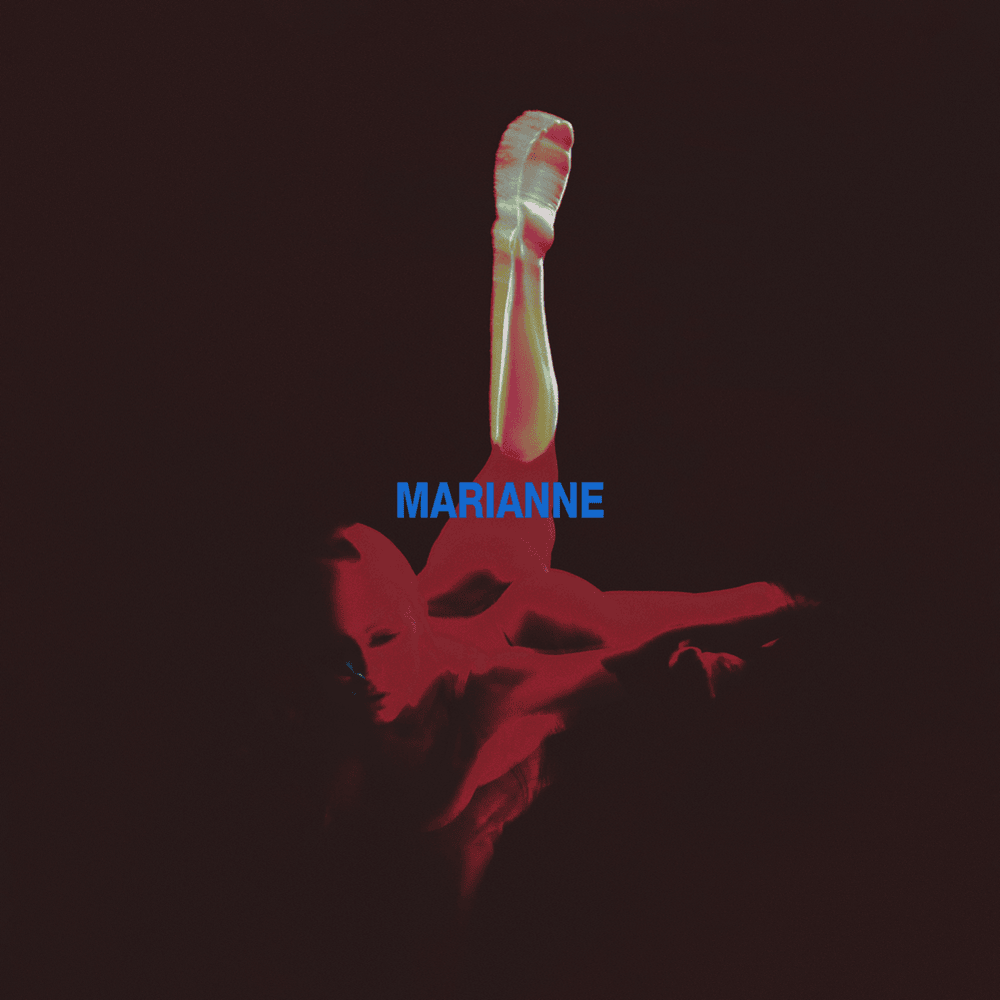
The first test is called “Marianne.”
And that doesn’t exactly sound optimistic.
“Marianne” and When It Can Be Tempting to Disappear
The song begins by enveloping the listener in an almost cinematic atmosphere.
Suspended drums, dark guitars, strings that seem to make their way through the fog, and a performance by Grian Chatten that no longer conveys just melancholy.
There’s something slightly menacing lurking beneath the surface.
The central idea is escapism.
“Marianne” suggests escaping from an uncomfortable reality and taking refuge elsewhere, although it’s never entirely clear whether that place represents salvation or a trap.
Part of the inspiration comes from Ripley, the extraordinary 2024 series starring Andrew Scott, whose black-and-white cinematography and atmosphere of poisoned beauty seem to fit perfectly with the aesthetic of this new phase.
The music video, directed by Dave Meyers, takes that feeling even further.
Meyers is no small name: he has worked for decades with some of the biggest names in pop and hip-hop and has directed such iconic music videos as Kendrick Lamar’s “HUMBLE.” and Travis Scott’s “SICKO MODE.”
His addition to the Fontaines D.C. universe speaks volumes about the scale at which the band now operates.
Cádiz was the first to hear about the future of Fontaines D.C.
Even before the official announcement, some Spanish fans had already heard part of the new album.
On August 8, during their concert at the Baluarte de la Candelaria in Cádiz—their first full-length show as headliners in 2026—Fontaines D.C. premiered two unreleased songs.
It was the “Marianne” era.
The other was titled “Six Shot Morning.”
The second track is built around a spacey synthesizer and a pulsating bass line that reinforce the impression that the band is gradually moving away from the guitar-driven sound with which it began its career.
We still don’t know if “Six Shot Morning” will ultimately appear on *Dopamine Chamber*. The official tracklist remains a mystery.
And perhaps that mystery is intentional.
Dopamine Chamber: Step into a room and let them manipulate your mood
The album title contains one of the most interesting ideas behind the project.
For Grian Chatten, the album itself acts as a dopamine chamber.
You go in.
The door closes.
And Fontaines D.C. are starting to experiment with you.
The idea is that each song can somehow alter the listener’s mental or emotional state.
We’re not simply talking about songs designed to evoke joy, sadness, or euphoria. The concept seems to explore something far more contemporary: how we’re constantly seeking out small stimuli capable of making us feel something in a world saturated with information, screens, algorithms, and anxiety.
That world is everywhere in *Dopamine Chamber*.
Artificial intelligence.
Political violence.
Climate change.
Celebrities.
Memes.
Infinite scroll.
Entertainment.
Catastrophe.
And there we were, watching.
“Romance was 60% human. This album is 60% corrupted.”
Chatten explained the change using a particularly powerful image.
In his view, Romance was about 60% human and 40% corrupted by automation and a loss of emotion.
Now the ratio has been reversed.
In Dopamine Chamber, corruption stands at approximately 60%.
Or, as he himself puts it:
“The mask is covering a little more of the face.”
That idea helps explain why the new album ventures into more electronic and synthetic territory.
It doesn’t seem like Fontaines D.C. are using machines simply to modernize their sound.
The machines are part of the plot.
James Ford is back at the controls
James Ford is once again producing the album; he also produced *Romance* and is one of the most important British producers of the past two decades.
His resume includes work with Arctic Monkeys, Depeche Mode, Blur, Gorillaz, Florence + The Machine, and the Pet Shop Boys.
But with Fontaines D.C., he seems to have found particularly fertile ground.
If *Romance* allowed the band to expand the boundaries of their sound, *Dopamine Chamber* seems determined to tear them down entirely.
According to the album’s official information, synthesizers, electronic percussion, samples, and icy textures will take center stage, while more organic elements—such as romantic strings and echoes of Italian pop—will still be present.
The description fits with the path the band has been following for years.
From ” Dogrel ” to ” A Hero’s Death.”
From there to Skinty Fia.
Then Romance.
They have never released exactly the same album twice.
Grian Chatten had to step away to write it
There’s something interesting about how the album came about.
Chatten sought inspiration while traveling through Venice, Vienna, and Sicily.
And much of that geographical distance seems to have carried over into the songs.
Fontaines D.C. have always written about belonging.
In Dogrel, Dublin was practically another member of the group.
Then they began to move away from the city.
Later, they sought to belong elsewhere, to form other relationships, and to adopt other identities.
Now the question seems to have changed.
It is no longer:
Where do we belong?
It is:
Where should we go on a getaway?
Bassist Conor Deegan has described precisely that evolution as one of the threads that connects the band’s various albums.
A vocal booth made out of mattresses in Palermo
Among all the stories about the recording process, there is one that is particularly revealing.
Part of the album was recorded in Palermo.
There, Chatten needed to record voices and ended up building a makeshift booth out of mattresses and pillows.
An almost homemade solution for a band that has just joined the world’s rock elite.
That contrast is very Fontaines-like.
The album may be released as deluxe vinyl editions, special editions, and as part of major international campaigns, but some of its tracks were born within an improvised setting in Sicily.
The Problem with Publishing After *Romance*
It’s not easy being Fontaines D.C. right now.
“Romance” debuted at No. 2 in the UK, went on to earn platinum certification, and marked the band’s first entry on the Billboard 200.
In addition, the band received Grammy nominations for Best Rock Album and for “Starburster” in the Best Alternative Music Performance category, won the International Group award at the 2025 BRIT Awards, and took home the Choice Music Prize in Ireland.
All of this was happening while songs like “Starburster” and “Favourite” were expanding their audience far beyond the typical post-punk crowd.
The commercially sensible move would have been to publish another Romance novel.
They have chosen to publish something else.
“Starburster” Changed the Rules
Perhaps the real turning point was “Starburster.”
That hyperventilated breathing that ran through the song—inspired by a panic attack Chatten had suffered—already signaled a band less interested in functioning as a traditional rock group.
There were electronic devices.
There was hip-hop.
There was anxiety transformed into rhythm.
There was a voice used almost like percussion.
“Marianne” seems to take that momentum and push it toward an even stranger place.
The guitar is still there.
But he no longer needs to be in control of the song.
Fontaines D.C. are no longer just a post-punk band
Perhaps the time has finally come to do away with that label.
Fontaines D.C. emerged from the massive Irish and British post-punk revival of the late 1990s.
But listening to them today alongside Dogrel almost feels like listening to two different bands.
Not because they’ve renounced it.
But because they have continued to move forward.
The group’s own visual evolution reflects this transformation: photography, fashion, design, music videos, and set design have gradually become fundamental parts of a much broader artistic universe.
“Dopamine Chamber ” seems to be the next logical step in that evolution.
And this time, they don’t want to leave any room for hope
This is probably the most important difference compared to Romance.
That album was full of beauty, even when it spoke of disconnection.
On the new album, Chatten has deliberately chosen to tone down some of that energy.
His intention is to portray ugliness more honestly.
Don’t hide her.
Do not soften it.
You don’t necessarily have to include a reassuring message at the end.
He wants the album to serve as a “catastrophic warning.”
It may seem like an exaggerated idea until you take a few seconds to think about the world the group is trying to describe.
So maybe it’s not that bad after all.
Eleven songs, and there’s still almost everything left to discover
The official website confirms that *Dopamine Chamber* will feature 11 songs.
But Fontaines D.C. has not yet revealed their song titles.
We officially know of only one:
2. Marianne
We also know that the album will be approximately 44 minutes long and will be available in various formats: digital, CD, cassette, black vinyl, blue vinyl, and a deluxe 45-rpm double-LP edition.
The rest remains inside the chamber.
Waiting.
October 16, and we’re heading into the Dopamine Chamber
After *Romance*, Fontaines D.C. could try to become the biggest rock band of their generation.
Maybe it will still happen.
But Dopamine Chamber raises a much more interesting possibility.
That they simply want to become the most unpredictable band of their generation.
“Marianne” is the first door.
On October 16, we’ll find out what’s behind it all.
And according to Grian Chatten, we might not like what we find very much.
Because Dopamine Chamber doesn’t seem designed to let us escape the present.
It seems designed to trap us inside it.