The Irish band’s fifth album, released on October 16, is receiving some of the best reviews of 2026. With Rosalía as a guest artist and a more electronic, monumental, and unsettling sound, Grian Chatten and his bandmates seem determined to become the rock band of their generation. But not everyone is convinced.
Fontaines D.C. no longer wants to be just a great rock band. It wants to become something much more unsettling.
And they may have succeeded.
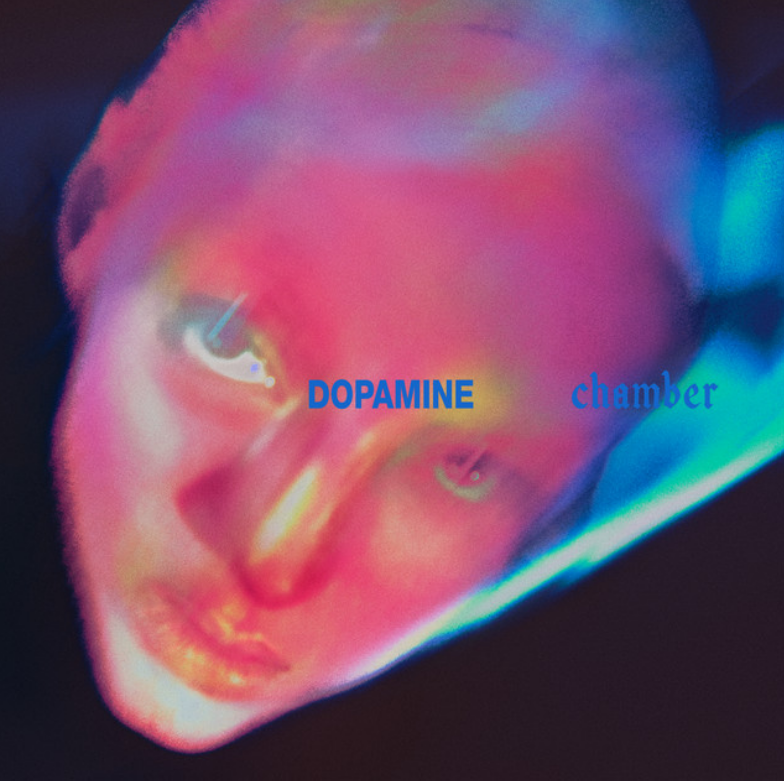
Two years after *Romance*, the album that cemented the Irish band’s status as an international phenomenon, Grian Chatten, Carlos O’Connell, Conor Curley, Conor Deegan, and Tom Coll are back with *Dopamine Chamber*, their fifth studio album.
Eleven tracks released on October 16, 2026, via XL Recordings, with James Ford once again at the helm of production and an unexpected collaboration with Rosalía.
But what really matters is what’s happening on the album itself.
Fontaines D.C. have definitively shed any obligation to sound like that post-punk band that debuted with *Dogrel* in 2019.
Now they create massive, dark, cinematic songs that speak to a society addicted to instant gratification, screens, appearances, and the desperate need to feel something.
And international critics have reacted enthusiastically—though with some reservations.
Is *Dopamine Chamber* Fontaines D.C.’s best album?
Early reviews paint an extraordinarily favorable picture.
The Guardian has awarded it five stars and considers it one of the band’s most ambitious and cohesive works.
The Independent has also given it a five-star rating, while the Irish magazine Hot Press gives it a 9 out of 10 and ranks it among the year’s top releases.
Pitchfork, traditionally more reserved in its ratings, gives it a 7.8 out of 10.
For its part, NME celebrates the band’s transformation into a group capable of filling stadiums without sacrificing its personality.
But not everyone agrees.
The Financial Times has published a much harsher review, awarding just two stars, and criticizing the band’s heavy sound and loss of spontaneity—a band that seems increasingly preoccupied with its own significance.
The divide is revealing.
Because *Dopamine Chamber* isn’t an album designed to please everyone.
It’s a work that demands you enter its universe and accept its rules.
From post-punk to dystopia—that’s what the new Fontaines D.C. album sounds like.
Anyone looking for a follow-up to “Boys in the Better Land” or “Jackie Down the Line” will likely find something very different.
The new album retains the band’s emotional intensity but transforms it through synthesizers, orchestral arrangements, electronic elements, abrasive guitars, and a production on an almost cinematic scale.
“Six Shot Morning” opens the album with a mechanical and menacing atmosphere, as if Depeche Mode had decided to compose the soundtrack for a society on the brink of collapse.
“Marianne,” the album’s first single, unfolds a hypnotic melody over a foundation that seems to be heading toward an inevitable catastrophe.
“Mimesis” features echoes of ’80s dark pop, while “Happy for You” recaptures some of the guitar-driven melancholy that made The Cure great.
But the real transformation comes in songs like “Tongue, ” where trip-hop, electronic experimentation, and guitars create one of the album’s strangest moments.
And then there’s “Demolition.”
A burst of distorted rock and emotional tension that reminds us that Fontaines D.C. can still sound dangerous when they want to.
The result isn’t necessarily a more accessible album than *Romance*.
It is, above all, a more ambitious album.
Rosalía and Fontaines D.C. and the Collaboration No One Expected
If there’s one song destined to draw much of the international attention, it’s “Where Is Gone?,” the collaboration between Grian Chatten and Rosalía.
And it’s worth noting something right from the start.
It’s not the pop song some might imagine.
The collaboration moves between a cinematic ballad, orchestral arrangements, and an atmosphere reminiscent of Ennio Morricone’s greatest compositions.
It could also work as a James Bond theme song from a particularly bleak future.
Chatten and Rosalía’s voices come together in a love story marked by disillusionment, distance, and the impossibility of regaining what has been lost.
Critics have reacted in different ways.
The Guardian, NME, Hot Press, and RTÉ highlight its beauty and drama, while the Financial Times believes the collaboration fails to live up to the chemistry it promises.
That discrepancy sums up the nature of the album quite well.
Fontaines D.C. isn’t looking here for an obvious collaboration to top the charts.
They aim to expand their universe.
And Rosalía fits right in with this trend toward music that is increasingly less concerned with the boundaries between genres.
The True Meaning of ” Dopamine Chamber“: We’re Hooked on Feeling Something
Behind all this musical architecture lies a profoundly contemporary idea.
Dopamine, associated with the brain’s reward mechanisms, becomes a metaphor for our dependence on immediate stimuli.
Social media.
The need for approval.
Compulsive consumption.
Relationships turned into experiences we seek to repeat.
And that feeling of emptiness that sets in when the next stimulus disappears.
Grian Chatten doesn’t simply make a straightforward argument against technology.
He does something far more unsettling.
He presents us with a world that knows it is sick, yet continues to seek pleasure within the very thing that is destroying it.
In “Japan, ” a delicate melody conceals an emotionally toxic relationship.
“One Man” oscillates between vulnerability and the need to escape.
And “Intimate, ” which closes the album, takes that vision into an almost apocalyptic landscape.
The music is seductive.
The lyrics are deeply pessimistic.
Therein lies one of the album’s great contradictions: Fontaines D.C. has composed extraordinarily captivating songs about a society that is losing its ability to enjoy things.
The Best Songs from *Dopamine Chamber*
After listening to the album and comparing the critics’ reviews, these are the five songs that best represent their sound.
“Marianne” — The perfect introduction to Fontaines D.C.’s new sound. Hypnotic, monumental, and menacing.
“Demolition” — The album’s most aggressive track. Distorted guitars and a particularly visceral Grian Chatten.
“Tongue” — One of the most daring compositions, featuring electronic elements, trip-hop, and shifts in intensity.
“Where Is Gone?” (featuring Rosalía) — An orchestral ballad as beautiful as it is unsettling, and one of the album’s most talked-about moments.
“Japan” — A delicate melody and an emotional darkness that prove Fontaines D.C. doesn’t need to make a lot of noise to be unsettling.
All the songs from *Dopamine Chamber*
- Six Shot Morning
- Marianne
- Mimesis
- Happy for You
- Demolition
- Tongue
- One Man
- Where Is Gone? (feat. Rosalía)
- You Miss Me
- Japan
- Intimate
Is Fontaines D.C. the most important rock band of its generation?
The question no longer seems far-fetched.
From *Dogrel* to *Dopamine Chamber*, Fontaines D.C. has released five albums in seven years, showcasing an artistic evolution rarely seen among today’s major guitar-driven bands.
Each album has brought something new.
Dogrel captured the urgency of Dublin’s youth.
A Hero’s Death introduced a more introspective darkness.
Skinty Fia explored Irish identity from a more complex perspective.
*Romance* opened the doors to a much broader sonic universe.
And Dopamine Chamber seems determined to take that transformation to its logical conclusion.
Is it their best album?
It may be too soon to say.
But it certainly seems to be one of the most important albums of their career.
Because it shows that Fontaines D.C. has grasped something fundamental: when a band achieves success, the greatest danger isn’t always failure.
Sometimes it’s starting to repeat themselves.
And these five musicians seem willing to do whatever it takes to avoid that.
Perhaps *Dopamine Chamber* isn’t the album all their fans were expecting.
But it’s probably the album Fontaines D.C. needed to make.
What International Reviews Really Say
I have compared the following reviews. It is important to note the discrepancies because they reinforce the credibility of our own critique.
| Medium | Rating | Main article |
|---|---|---|
| The Guardian | 5/5 | An extraordinarily ambitious, cohesive, and captivating album. |
| The Independent | 5/5 | It considers it an exceptional work and one of the band’s greatest artistic statements. |
| Hot Press | 9/10 | It highlights the album’s cultural significance and the evolution of its sound. |
| Pitchfork | 7.8/10 | Praises its dark beauty and its ability to transform cynicism into monumental music. |
| NME | Very positive | Celebrates the band’s evolution toward a more experimental and massive sound. |
| Financial Times | 2/5 | Criticizes its heaviness, a certain monotony, and an ambition it considers excessive. |